What Is Spatial Branding? A Practical Guide for Commercial Spaces
Short answer
Spatial branding is the practice of translating a brand into a physical environment. It combines identity, wayfinding, signage, materials, graphics, light and digital media so a workplace, hospital, store, hotel or campus communicates who it belongs to and helps people use it confidently. It is broader than applying a logo to a reception wall.
Key takeaways
- Spatial branding covers identity, wayfinding, signage, graphics, materials, light and digital content as one system.
- Interior design, signage, wayfinding and spatial branding answer four different questions. The best projects coordinate all four.
- Recognition comes from a consistent palette, material language and typography rather than from repeating the logo.
- Start while the architecture can still accommodate power, backing, recesses and mounting points.
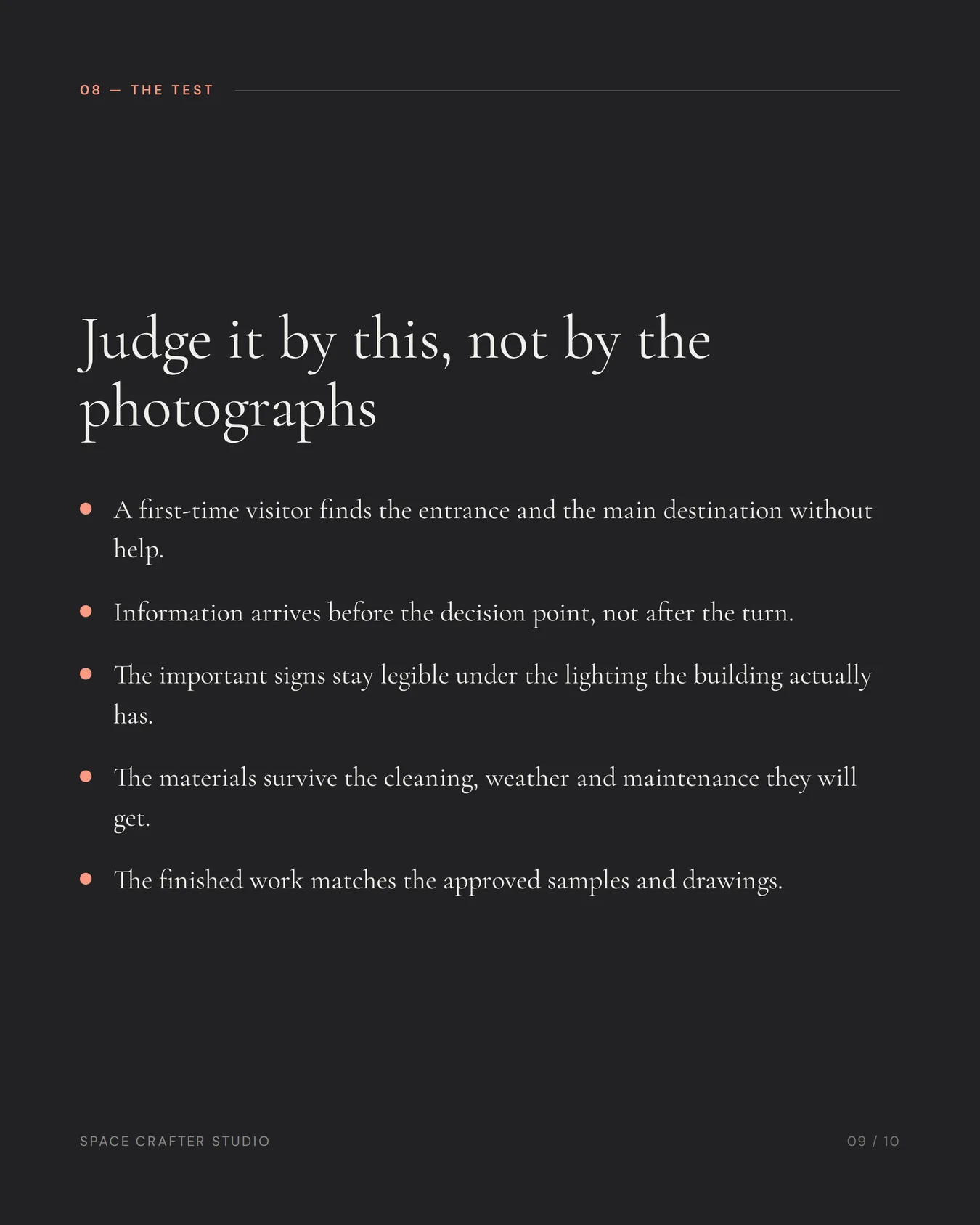
- Judge the result by whether first-time visitors can navigate it, not by the photographs.
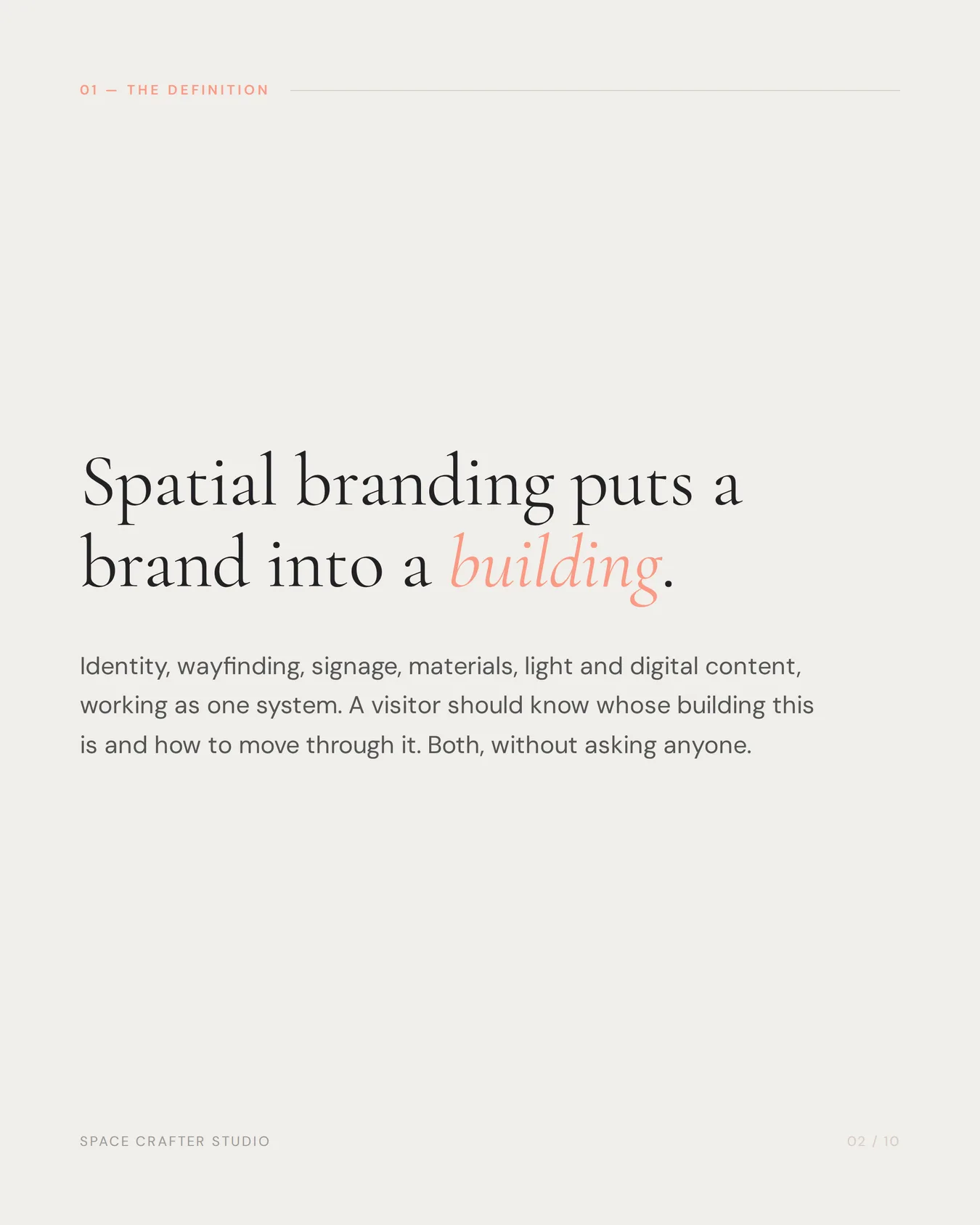
Spatial branding is the practice of translating a brand into a physical environment. It brings together identity, wayfinding, signage, materials, graphics, light and digital media so that a workplace, hospital, store, hotel or campus communicates who it belongs to and helps people use it confidently.
It is bigger than putting a logo on a reception wall. A strong spatial brand influences what visitors notice first, how they move, where they pause and what they remember after leaving.
What does spatial branding include?
A spatial branding system can include:
- exterior building identity and entrance signage;
- reception signs and brand walls;
- directional, floor and room signage;
- environmental graphics, murals and wallcoverings;
- timeline, culture and recognition walls;
- pylons, totems and digital directories;
- LED walls and changing digital content;
- material, colour, lighting and finish standards; and
- a repeatable design language for multiple locations.
The exact mix depends on what the space must achieve. A hospital needs calm, legible navigation. A retailer needs fast recognition and merchandising flexibility. A corporate campus may need visitor guidance, employee culture and consistent identity across several buildings.
Spatial branding vs interior design vs signage
These disciplines overlap, but they are not interchangeable.
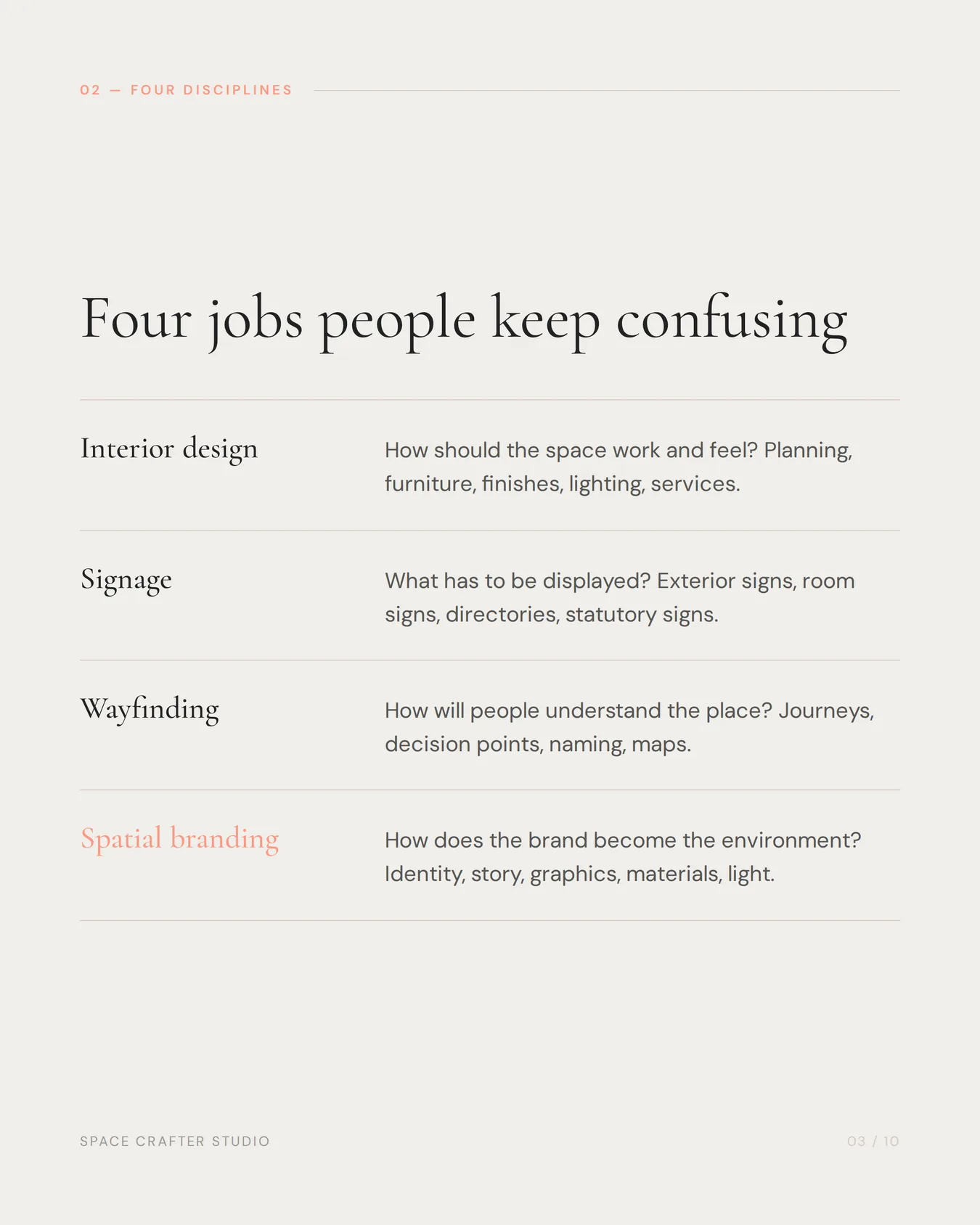
| Discipline | Main question | Typical scope |
|---|---|---|
| Interior design | How should the space function and feel? | Planning, furniture, finishes, lighting and services |
| Signage | What information or identity must be displayed? | Exterior signs, room signs, directories and statutory signs |
| Wayfinding | How will people understand and navigate the place? | Journeys, decision points, naming, maps and directions |
| Spatial branding | How does the brand become part of the environment? | Identity, story, navigation, graphics, materials, light and digital touchpoints |
The best projects coordinate all four. Architecture establishes the space. Interiors shape its use and atmosphere. Spatial branding adds the recognisable brand layer, while wayfinding makes the experience understandable.
Why does spatial branding matter?
1. It makes a place recognisable
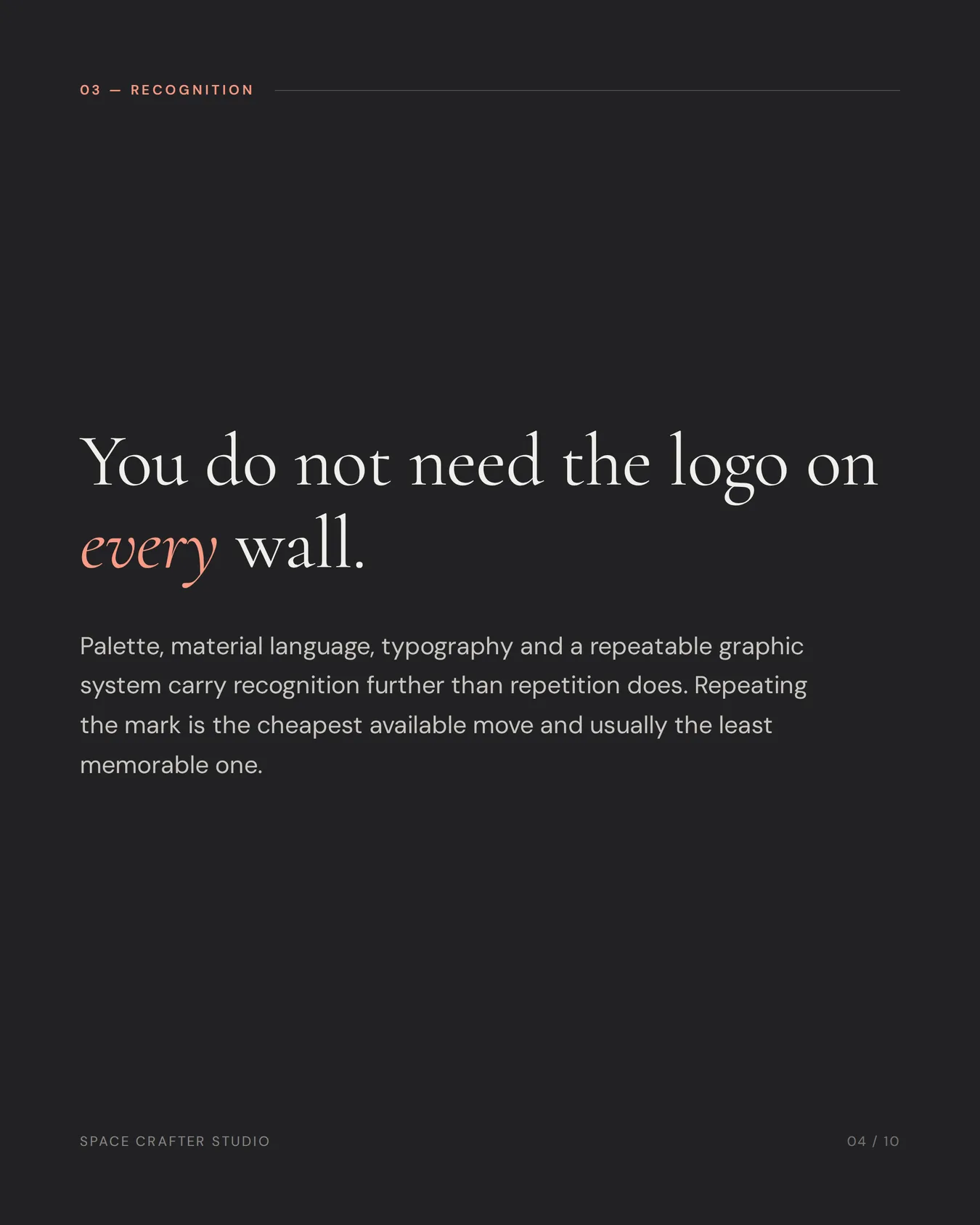
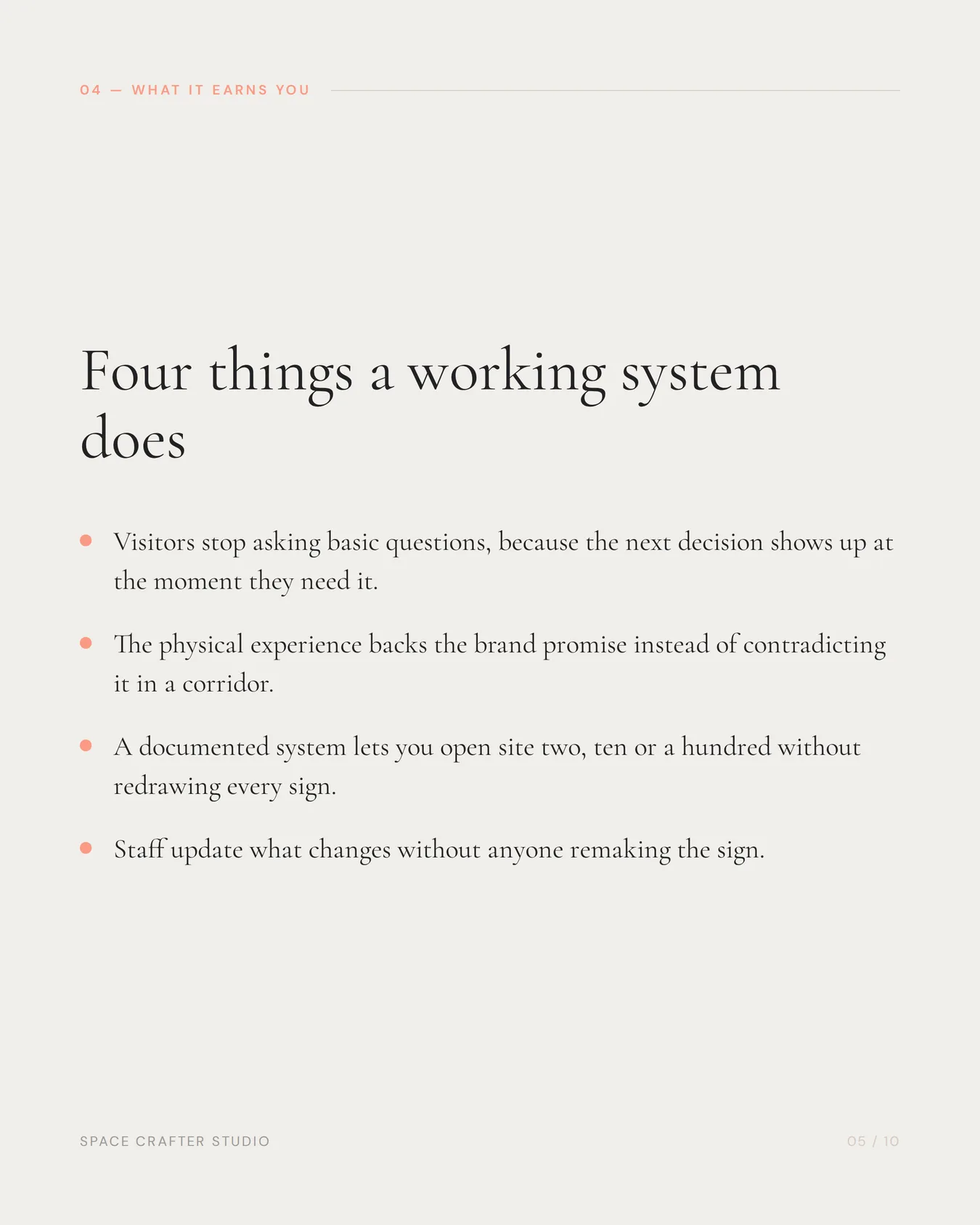
People should be able to tell where they are without seeing the same logo repeated everywhere. A consistent palette, material language, typography and graphic system can create recognition more subtly—and often more memorably.
2. It reduces uncertainty
When entrances, destinations and routes are clear, visitors ask fewer basic questions. A useful system reveals the next decision at the moment it is needed instead of filling every wall with instructions.
3. It connects experience to brand promise
A healthcare brand that promises reassurance should not confront visitors with cold, confusing corridors. A technology company that speaks about innovation should not have a static, generic reception. The physical experience either supports the promise or contradicts it.
4. It protects consistency during growth
A documented system helps a company open a second, tenth or hundredth site without redesigning every sign from scratch. The design can adapt to local architecture while preserving the elements that make the brand recognisable.
What is the spatial branding process?
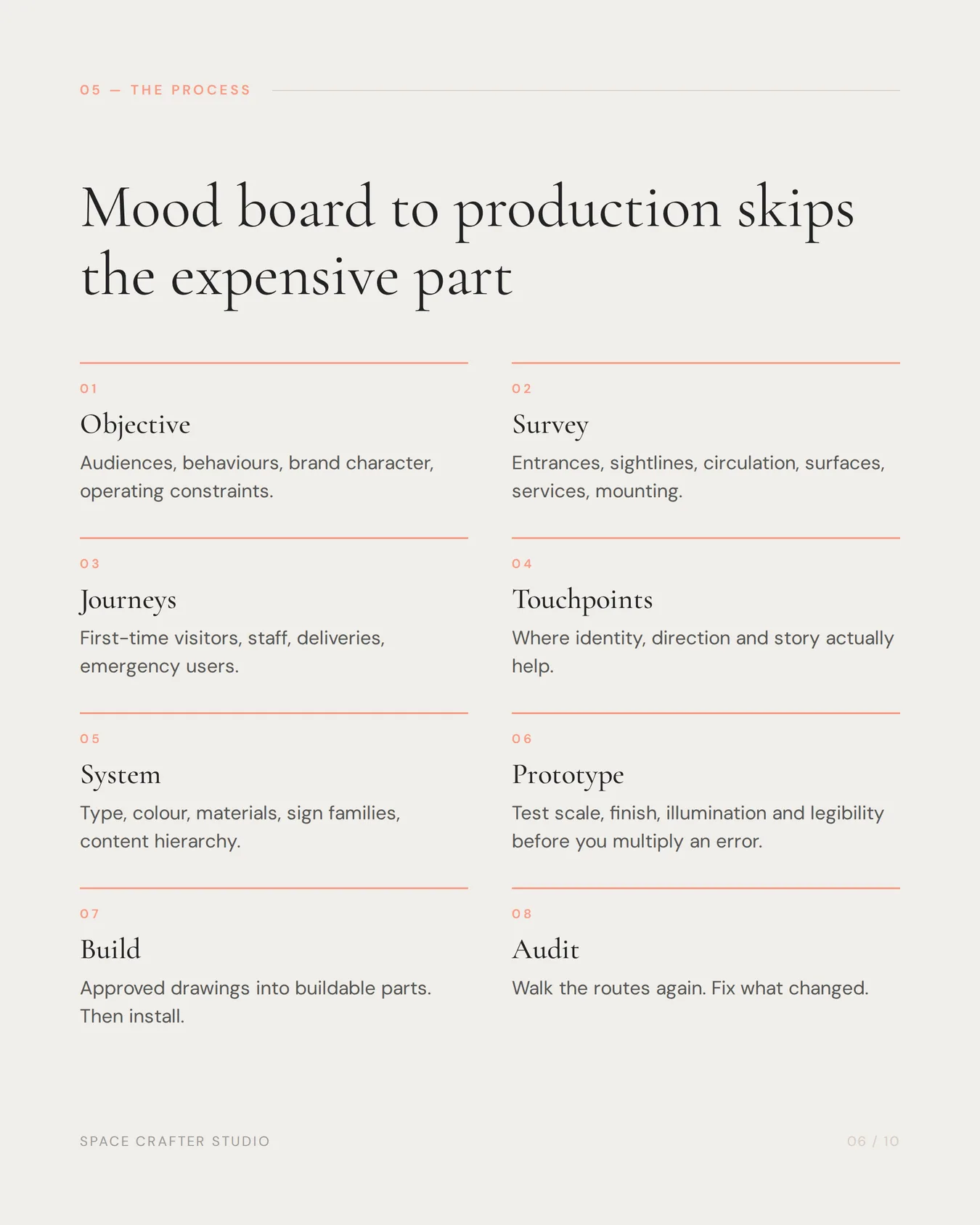
A dependable process moves from understanding to engineering—not directly from mood board to production.
- Discover the objective. Define the audiences, desired behaviours, brand character and operational constraints.
- Survey the site. Record entrances, sightlines, circulation, surfaces, lighting, services and mounting conditions.
- Map the journeys. Trace how first-time visitors, staff, deliveries and emergency users move through the environment.
- Plan the touchpoints. Decide where identity, direction, information, story and digital content genuinely help.
- Design the system. Develop typography, colour, materials, sign families, graphics and content hierarchy as one language.
- Prototype critical elements. Test scale, finish, illumination, readability and fixings before multiplying an error.
- Fabricate and install. Translate approved drawings into buildable components and coordinate safe installation.
- Audit after handover. Walk the routes again, check real sightlines and update any content that has changed.
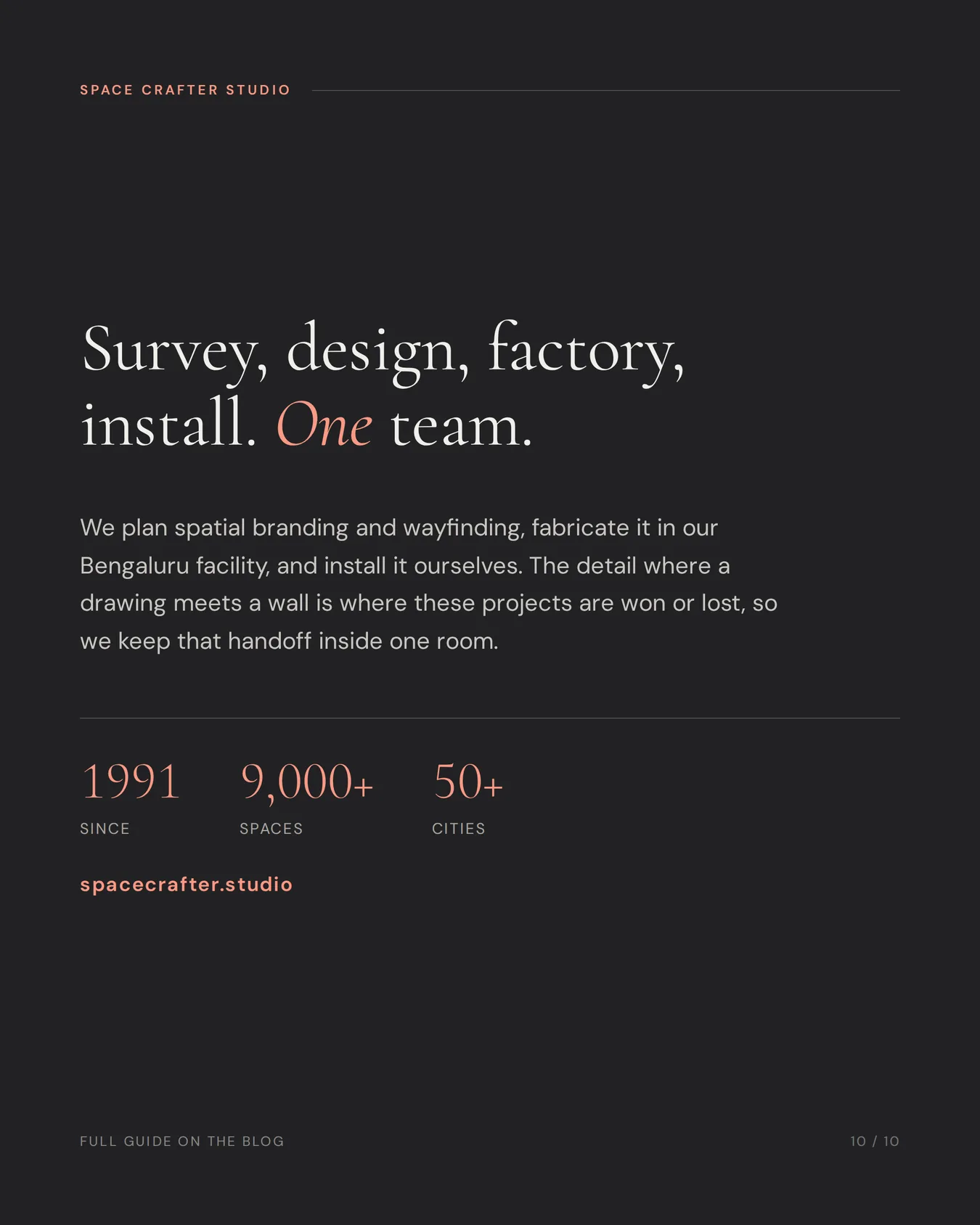
SpaceCrafter Studio combines these steps under one accountable team: survey and design, fabrication in its Bengaluru factory, and installation on site. That continuity matters because spatial branding succeeds in the details where a drawing meets a wall.
What should a spatial branding brief contain?
The most useful brief is not a long list of sign quantities. It explains the problem.
Include:
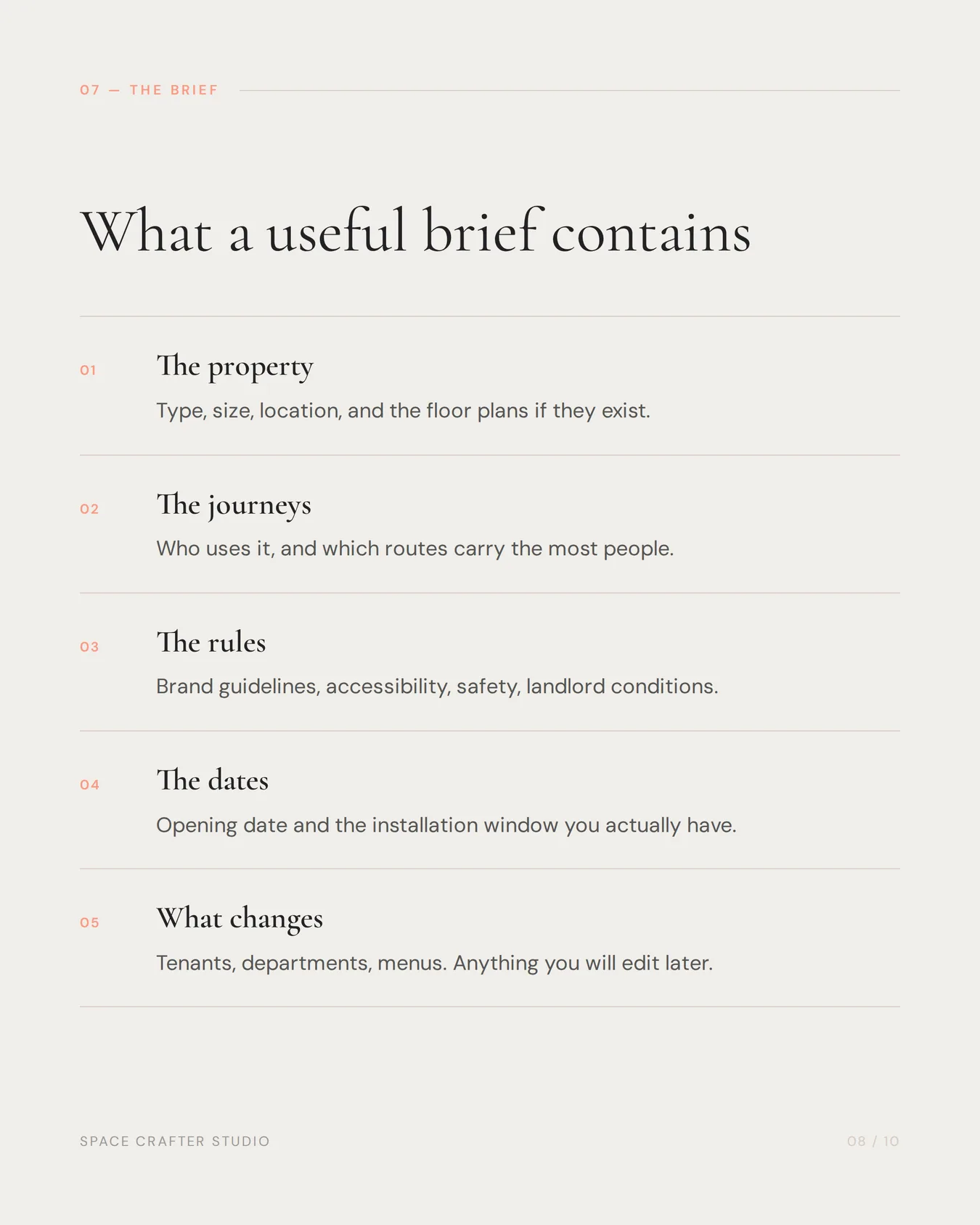
- the type, size and location of the property;
- who uses it and which journeys matter most;
- architectural drawings or floor plans, if available;
- brand guidelines and mandatory identity rules;
- opening date and installation constraints;
- known accessibility, safety and landlord requirements;
- what changes frequently, such as tenants, departments or menus; and
- the budget range or phasing priority.
If quantities are not known, begin with a spatial branding audit. A survey and sign location plan can determine the scope before money is committed to fabrication.
How do you judge whether it worked?
Do not judge a spatial branding project by photographs alone. Review whether:
- first-time visitors can find the entrance and main destinations;
- information appears before—not after—a decision point;
- important signs remain legible under actual lighting conditions;
- the environment feels recognisably connected to the brand;
- the materials suit cleaning, weather and maintenance conditions;
- staff can update changeable information without remaking the system; and
- the finished work matches the approved samples and drawings.
When should spatial branding begin?
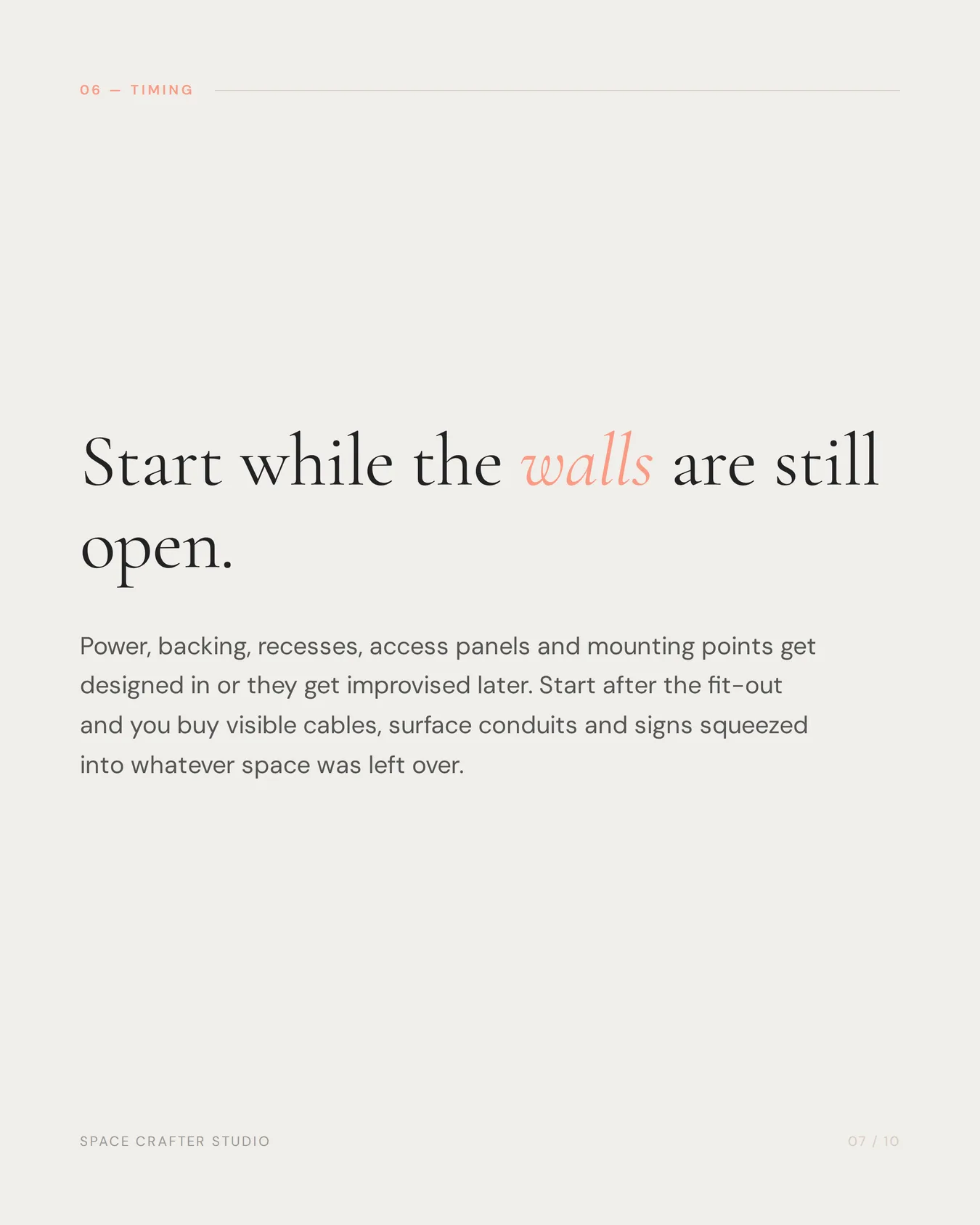
Ideally, it begins while the architecture and interiors can still accommodate power, backing, recesses, access panels and mounting points. Starting early prevents visible cables, improvised fixings and signs squeezed into leftover spaces.
It can also improve an existing property. In that case, the audit should identify which elements can stay, which need correction and which additions will make the biggest difference first.
A useful way to think about it
Spatial branding is not decoration applied at the end. It is the system that helps a space identify itself, tell its story and work for the people inside it.
SpaceCrafter Studio has worked across commercial environments since 1991, designing, fabricating and installing signage, LED walls, murals and wayfinding in-house. Explore the full spatial branding process or share a site for a project conversation.
Last reviewed 2026-09-19 by the SpaceCrafter Studio Design Team. Space Crafter Studio is a unit of Kingar Signs Private Limited, Bengaluru, designing, fabricating and installing signage, wayfinding, LED walls and brand environments since 1991.