Best Materials for Outdoor Signage in India: Acrylic, ACP, Metal, Vinyl and More
Short answer
There is no single best material for every outdoor sign in India. Aluminium and composite panels suit lightweight structures and flat faces, stainless steel suits durable fabricated letters and premium finishes, acrylic is widely used for illuminated faces, and exterior-grade vinyl works for printed or cut graphics. The correct build depends on climate, height, lighting, structure, cleaning and expected service life.
Key takeaways
- Indian projects combine UV, heat, monsoon rain, dust, coastal salt, temperature swings and wind load, sometimes on one elevation.
- "Acrylic sign" or "metal sign" is not a specification. Thickness, grade, coating system and component brands decide performance.
- Illuminated channel letters are an assembly of face, returns, tray, LED modules, wiring and sealed fixings.
- Most early failures come from trapped water, untreated edges, poor surface preparation, sealed-in heat and incompatible metals.
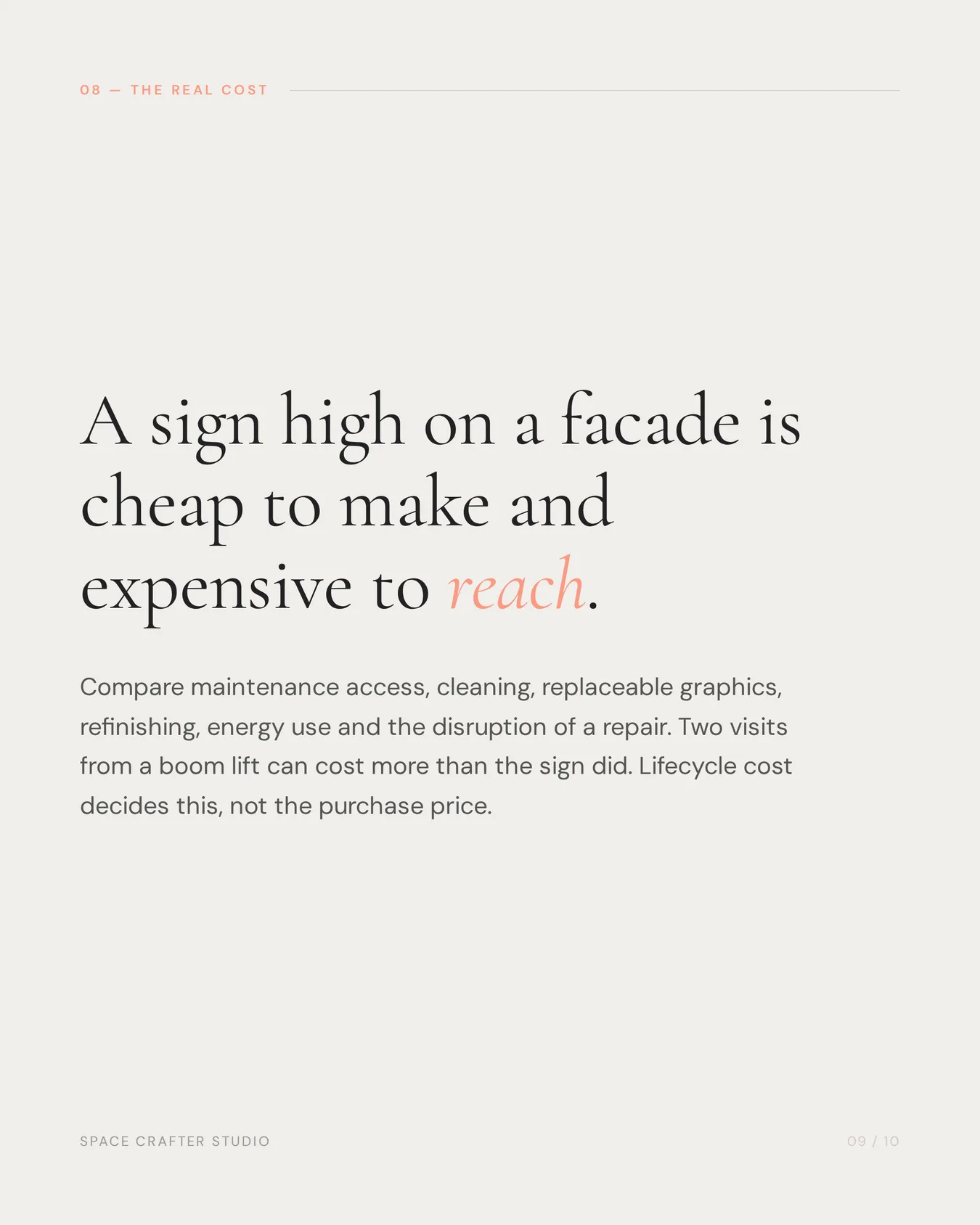
- Compare lifecycle cost. A sign high on a facade is inexpensive to make and costly to access twice.
There is no single best material for every outdoor sign in India. Aluminium and suitable composite panels are useful for lightweight structures and flat sign faces; stainless steel suits durable fabricated letters and premium finishes; acrylic is widely used for illuminated faces; and exterior-grade vinyl works for printed or cut graphics. The correct build depends on climate, height, lighting, structure, cleaning and expected service life.
Material selection should begin with the environment—not a sample viewed indoors.
What must an outdoor sign withstand?
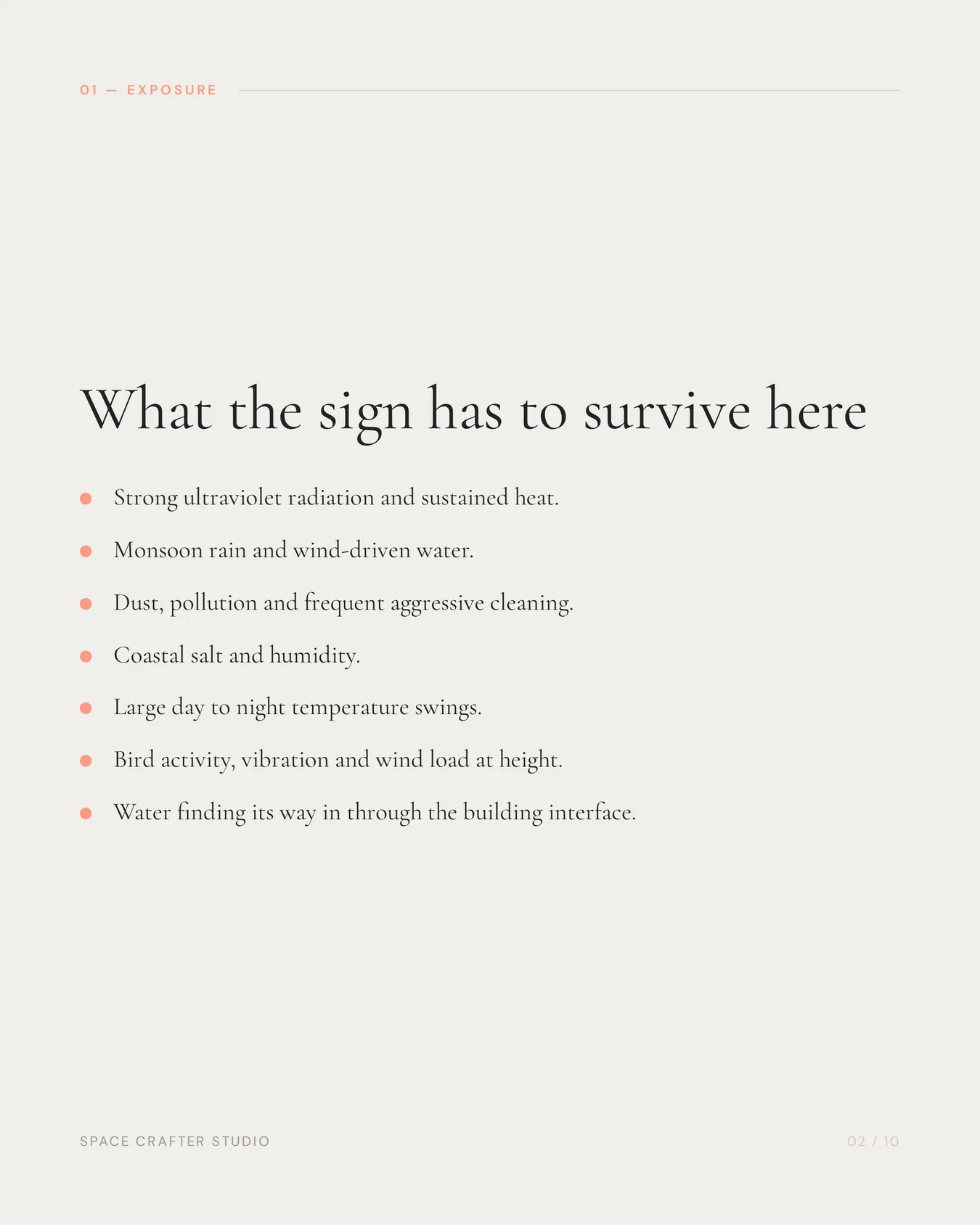
India contains several exposure conditions, sometimes on the same project:
- strong ultraviolet radiation and heat;
- monsoon rain and wind-driven water;
- dust, pollution and frequent cleaning;
- coastal salt and humidity;
- large day–night temperature changes;
- bird activity and organic deposits;
- vibration and wind load at height; and
- water entry through building interfaces.
The sign face, structure, fixings, coating, wiring, drainage and wall connection all need compatible specifications.
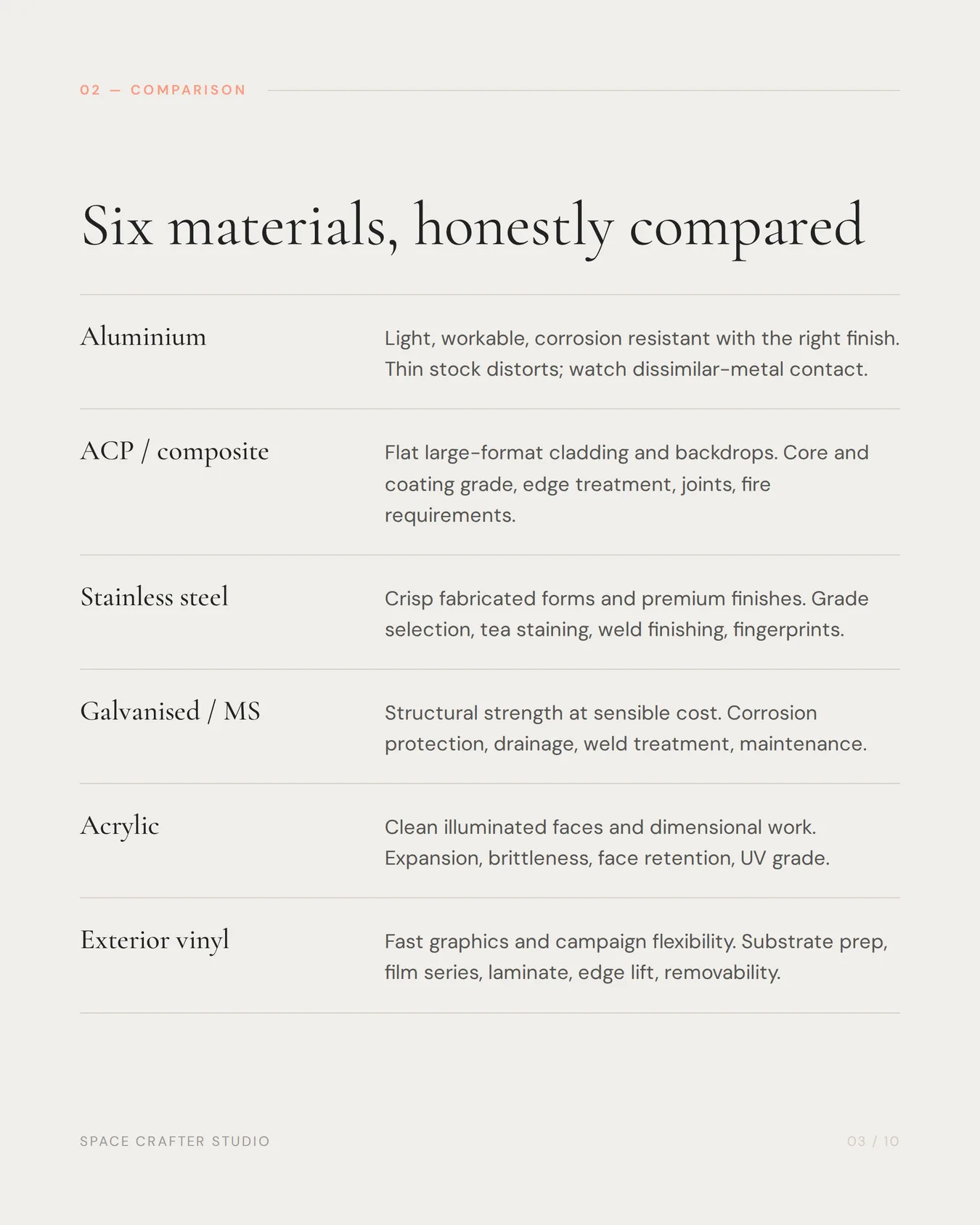
Outdoor signage material comparison
| Material | Typical strengths | Watch for | Common applications |
|---|---|---|---|
| Aluminium | Lightweight, workable and corrosion resistant with the right finish | Thin material can distort; dissimilar-metal contact and coating quality matter | Frames, returns, panels and letters |
| ACP/composite panel | Flat large-format surface, efficient cladding and backdrop | Core and coating grade, edge treatment, joints and fire requirements | Fascia, backdrops and facade elements |
| Stainless steel | Strong, crisp fabricated forms and premium finishes | Grade selection, tea staining, weld finishing and fingerprints | Letters, logos, frames and plaques |
| Galvanised/mild steel | Structural strength and cost efficiency | Corrosion protection, drainage, weld treatment and maintenance | Internal frames, pylons and supports |
| Acrylic | Clean illuminated faces, colour and dimensional fabrication | Expansion, brittleness, face retention, grade and UV exposure | Channel-letter faces and lightboxes |
| Polycarbonate | Impact resistance and useful translucent applications | Scratch resistance, yellowing risk by grade and thermal movement | Protective or illuminated faces |
| Exterior vinyl/print film | Fast graphics, colour and campaign flexibility | Substrate preparation, film series, laminate, edge lift and removability | Windows, panels, vehicles and short-to-medium campaigns |
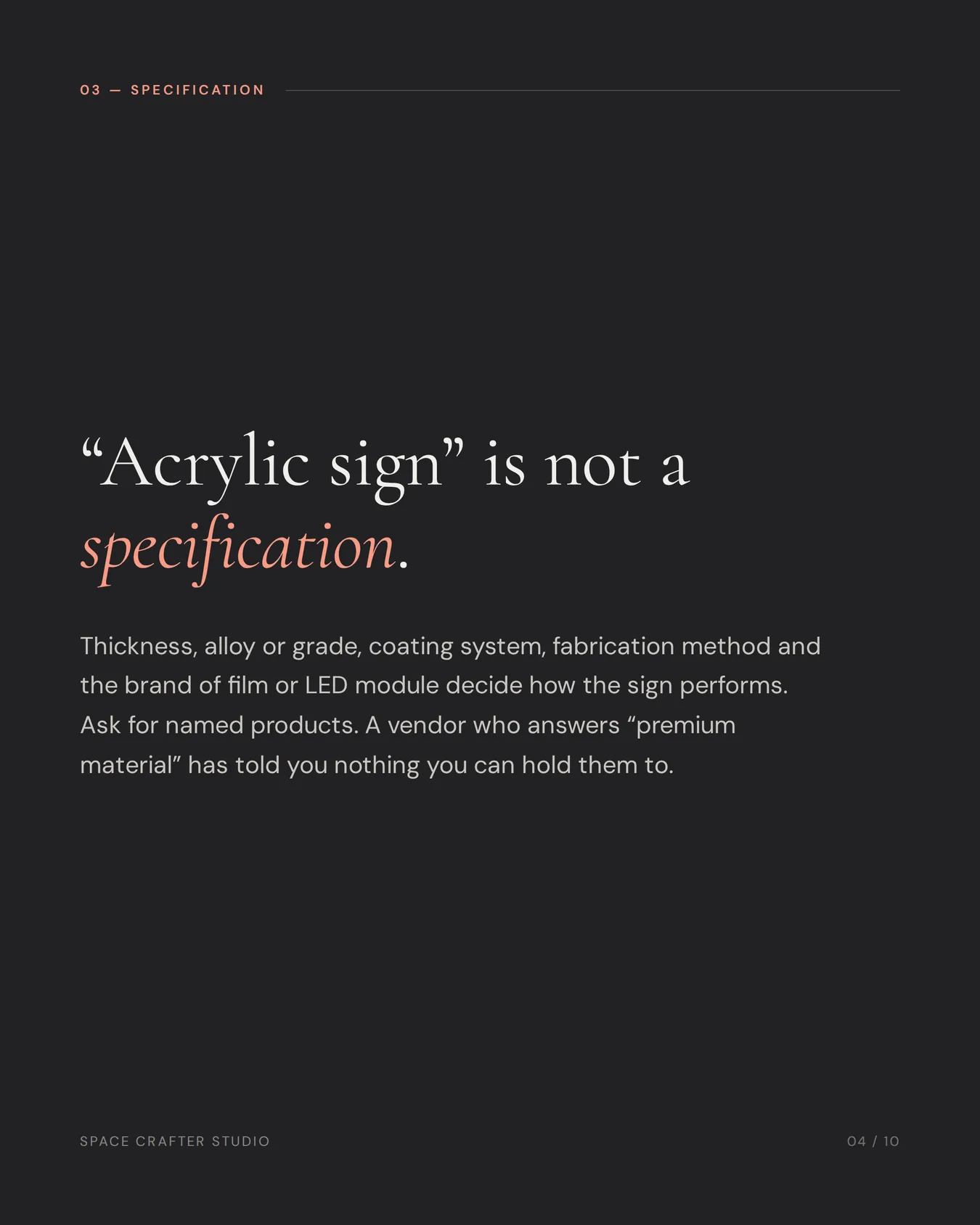
“Acrylic sign” or “metal sign” is not a complete specification. Thickness, alloy or grade, coating system, fabrication method and brand of film or illumination component determine performance.
Which material is best for illuminated letters?
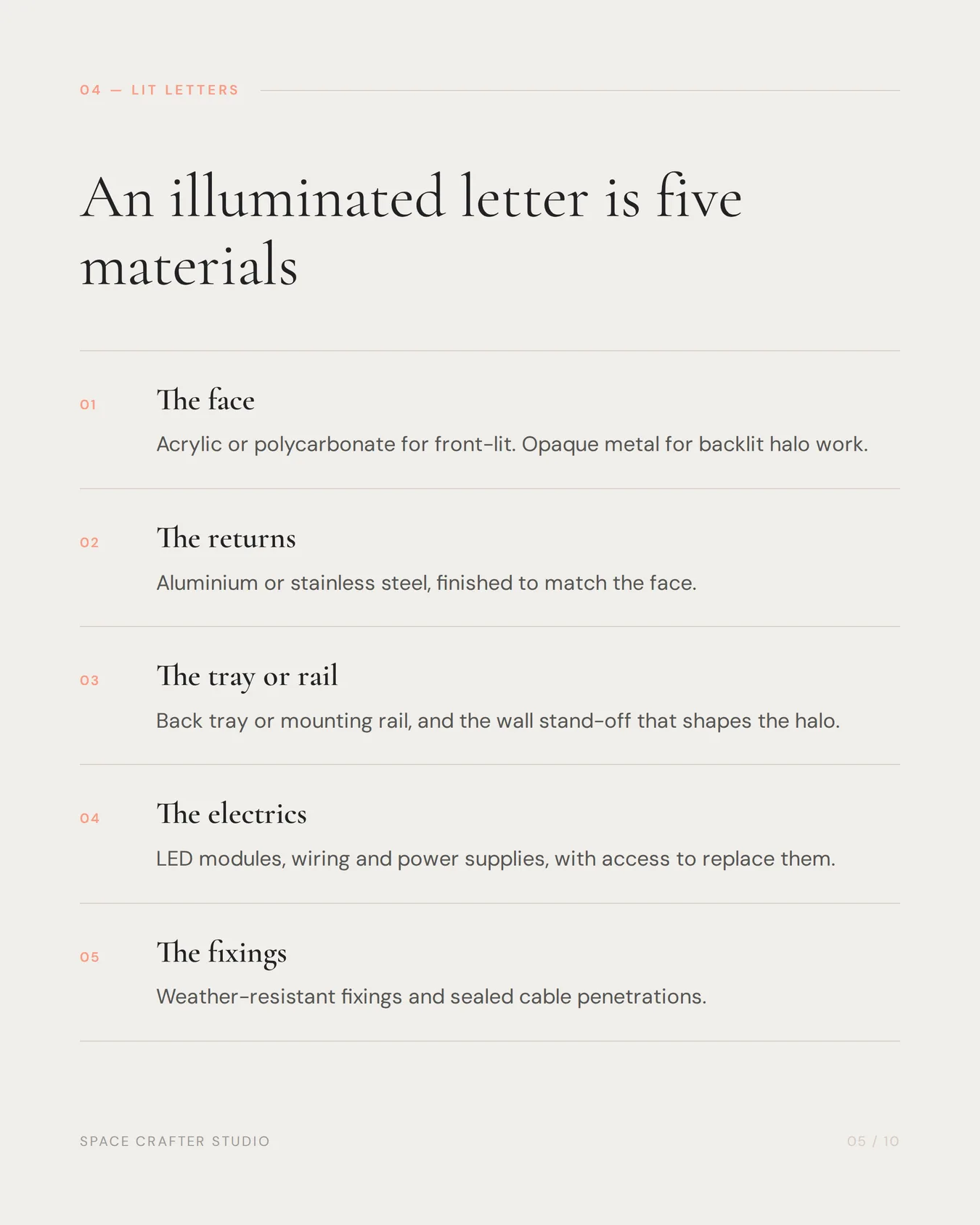
Illuminated channel letters usually combine materials:
- an acrylic or polycarbonate face for front-lit letters;
- aluminium or stainless-steel returns;
- a back tray or mounting rail;
- LED modules, wiring and power supplies; and
- weather-resistant fixings and cable penetrations.
Backlit letters may use opaque metal faces and returns with light washing the wall behind. The wall finish and stand-off distance affect the halo as much as the LED count.
Ask to see an illuminated sample in a darkened environment. Daytime finish and nighttime uniformity are separate approval criteria.
ACP vs acrylic for outdoor signage
ACP and acrylic solve different problems.
- ACP is commonly used for larger flat backdrops, cladding and rigid panels.
- Acrylic is commonly used for dimensional letters, translucent faces and smaller sign components.
An exterior identity sign may use an ACP fascia with illuminated acrylic-faced letters. The question is not which material wins; it is whether the complete assembly is specified and detailed correctly.
Stainless steel vs aluminium letters
Choose between them based on visual finish, weight, fabrication, environment and budget.
Stainless steel can provide brushed, polished or coated finishes and crisp premium letters. Aluminium reduces weight and can be painted or powder coated. In a coastal or highly polluted environment, grade, coating and maintenance become especially important for both.
Require a physical finish sample. “Gold,” “silver” or “brushed” can describe many different appearances.
How should coastal signage be specified?
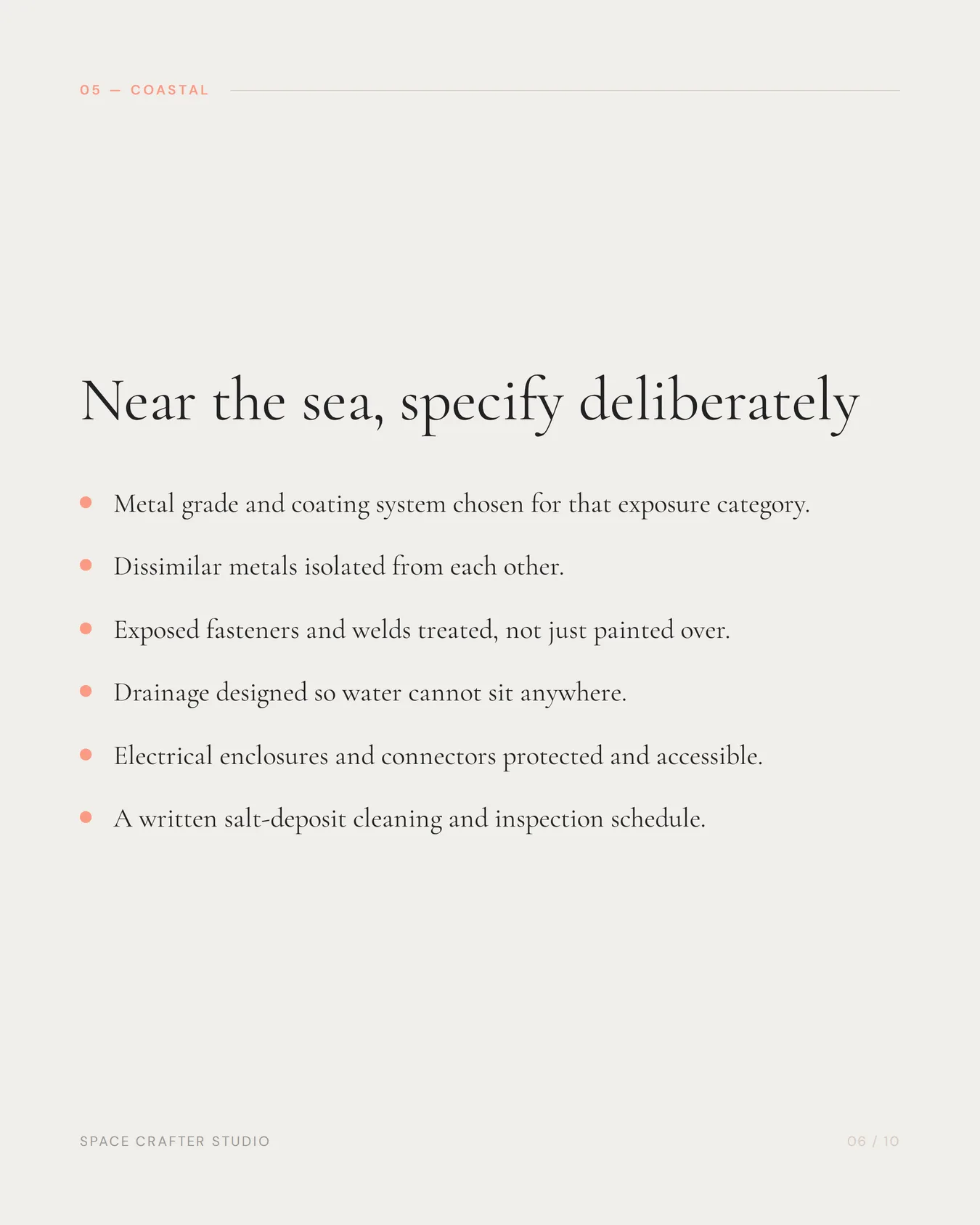
Coastal projects need deliberate corrosion control. Review:
- metal grade and coating system;
- dissimilar-metal isolation;
- exposed fasteners and weld treatment;
- drainage and trapped water;
- electrical enclosure and connector protection;
- salt-deposit cleaning; and
- an inspection and maintenance schedule.
Do not assume a material labelled “stainless” or “outdoor” will perform equally in every exposure category.
What causes outdoor signage to fail early?
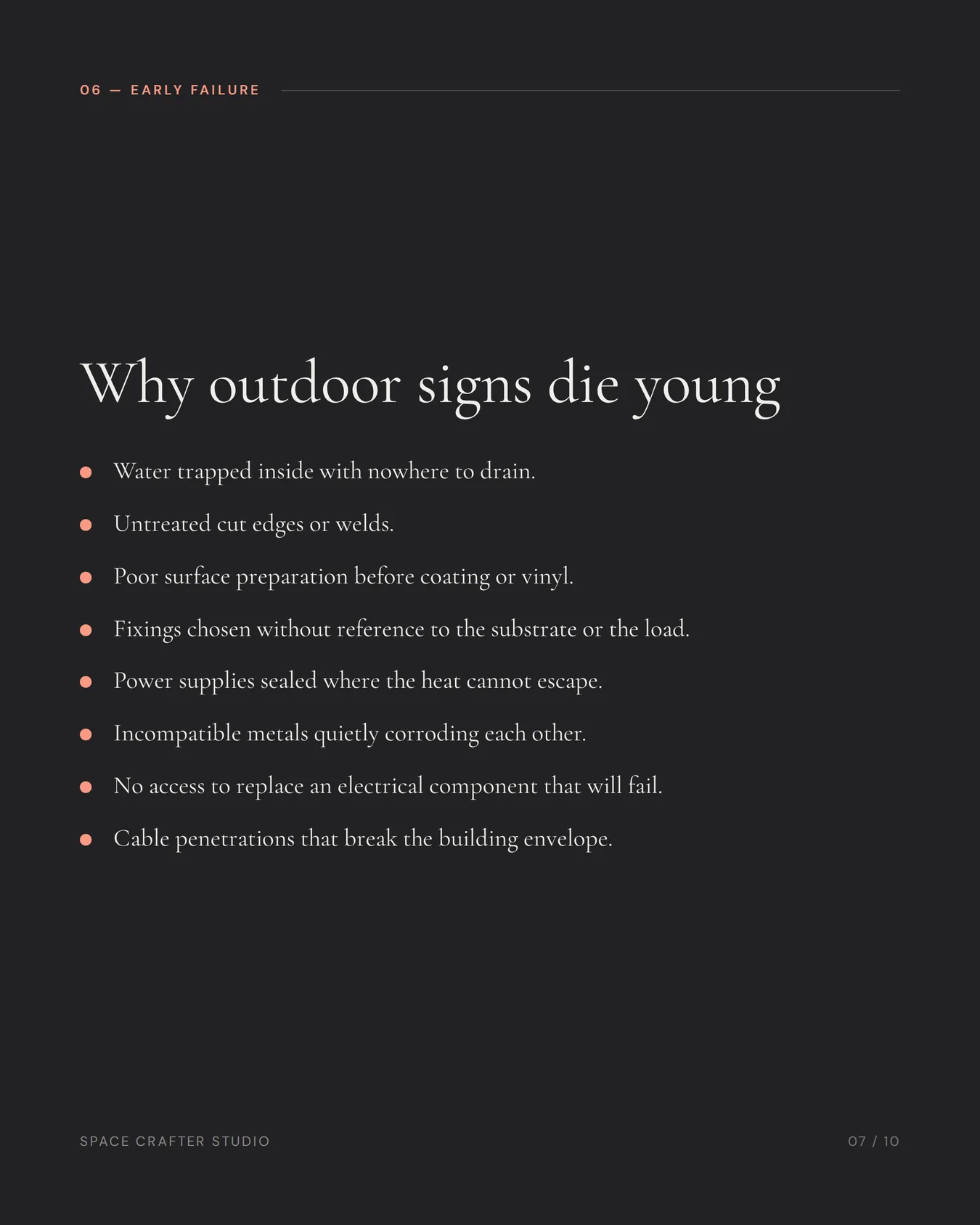
Common causes include:
- water trapped without drainage;
- untreated cut edges or welds;
- inadequate surface preparation before coating or vinyl;
- fixings chosen independently of substrate and load;
- power supplies sealed where heat cannot escape;
- incompatible metals creating corrosion risk;
- printed graphics without a suitable exterior film and laminate;
- no access to replace electrical components; and
- cable penetrations that compromise the building envelope.
The cheapest component is rarely the whole explanation. Outdoor durability comes from detailing and installation as much as the visible material.
What should you ask a signage vendor?
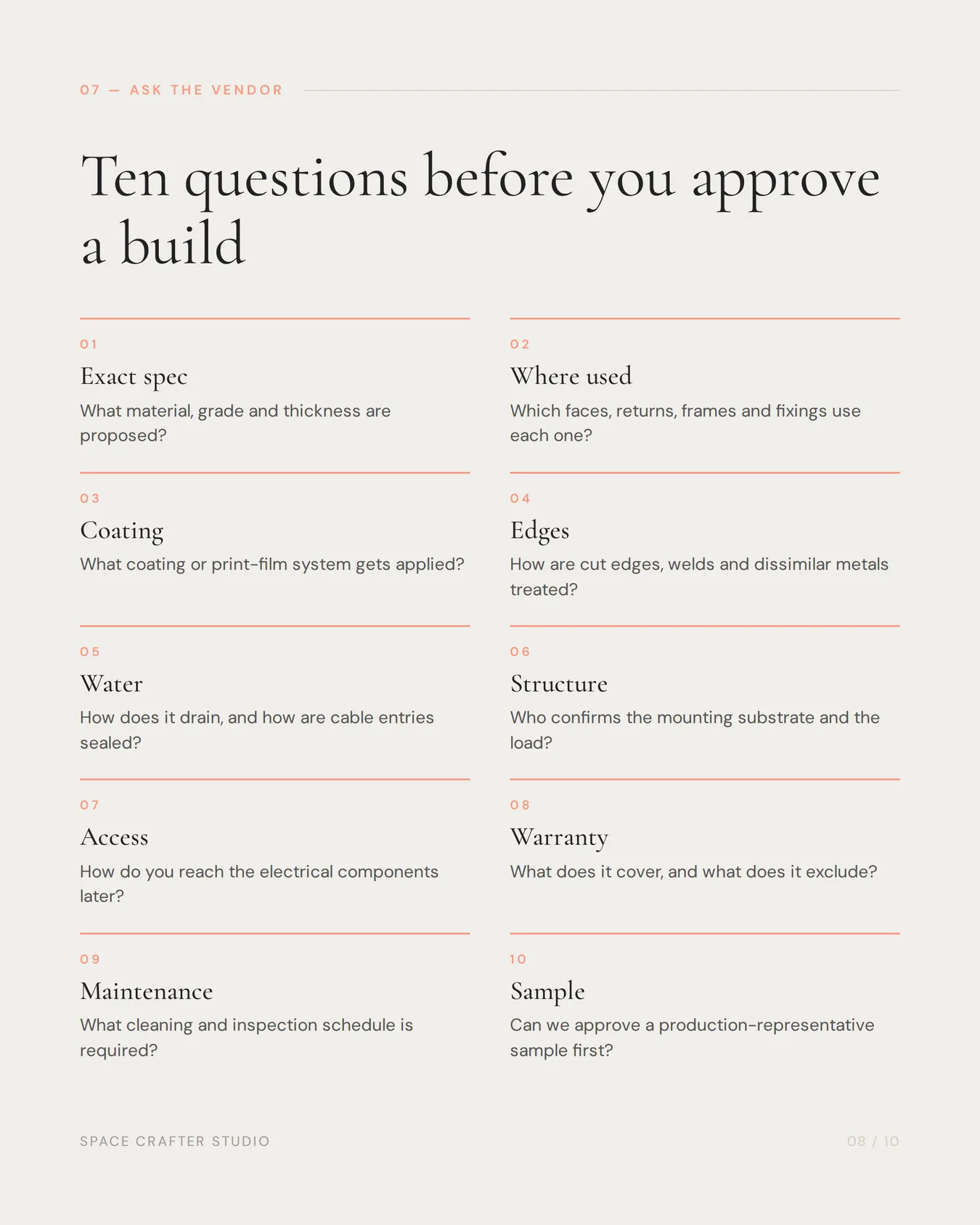
- What exact material, grade and thickness are proposed?
- Which faces, returns, frames and fixings use each material?
- What coating or print-film system will be applied?
- How are cut edges, welds and dissimilar metals treated?
- How does water drain and how are cable entries sealed?
- Who confirms the structure and mounting substrate?
- How will electrical components be accessed?
- What does the warranty cover—and exclude?
- What cleaning and inspection schedule is required?
- Can we approve a production-representative sample?
Use lifecycle cost, not just purchase price
Compare expected maintenance access, cleaning, replaceable graphics, refinishing, energy use and disruption when repairs are needed. A sign high on a facade may be inexpensive to make but costly to access twice.
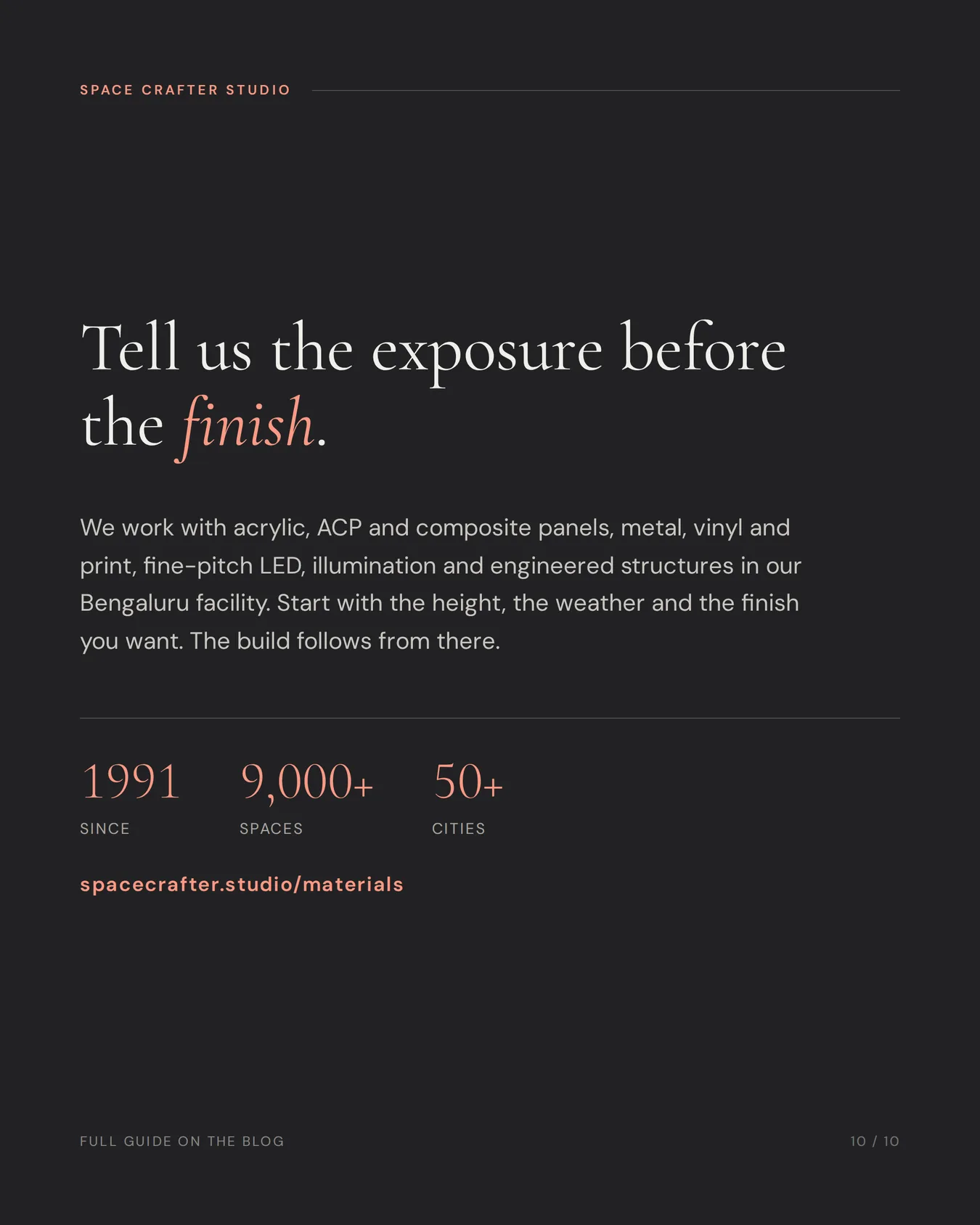
SpaceCrafter Studio works with acrylic, ACP and composite panels, metal, vinyl and print, fine-pitch LED, illumination, and engineered structures in its Bengaluru facility. See its published materials and capabilities or discuss the exposure, height and desired finish before choosing a build.
Last reviewed 2026-09-19 by the SpaceCrafter Studio Fabrication Team. Space Crafter Studio is a unit of Kingar Signs Private Limited, Bengaluru, designing, fabricating and installing signage, wayfinding, LED walls and brand environments since 1991.