Custom lighting and preserved moss walls · Bengaluru
We start with the light the room already has.
The sun lights your space for most of the working day, and it changes every hour. We read where it falls first. Then we design the lighting and the green walls that work with it, and build them in our own factory in Bengaluru.
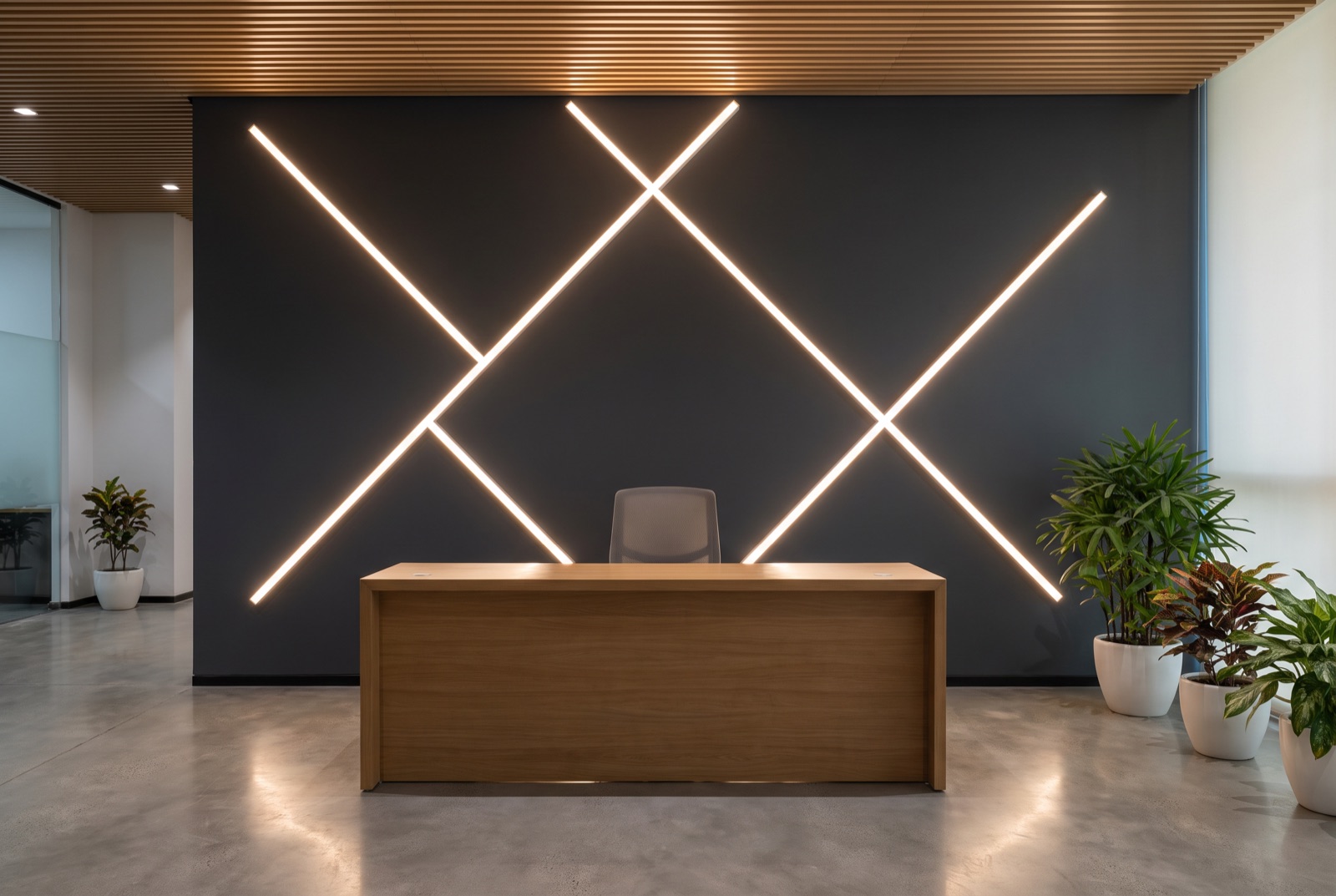
In short
- An open office needs 300 to 500 lux on the desk. A reception needs 200 to 300, and a corridor 100 to 150.
- Use neutral white light, about 4000K, beside daylight, and warm light, 2700 to 3000K, in the evening and in lounges.
- In Bengaluru a north window gives the softest light. A west window gives the most glare and fading, in the afternoon.
- A preserved moss wall needs no water, no soil and no light. It must be kept out of direct sun.
- Ask for colour rendering (CRI) of 90 or more wherever brand colours, food, timber or plants are on show.
One room, one day
Move the time and turn the window. The same room needs a different answer each time, which is why we look at the daylight before we draw a single fitting.
A bright sun patch near the window
The patch is the glare risk. We keep glossy faces and screens out of its path, and choose matt finishes for whatever sits beside it.
- Daylight
- 95%
- of what the room needs
- Our lights
- 5%
- to fill the rest
- Colour
- 3500K
- soft white
East-facing windows. Low, bright sun in the morning, then calm for the rest of the day.
A simplified picture for Bengaluru, to show the idea. Trees, neighbouring buildings, blinds and glass tint change it, so we check your room on site.
Eight things before a fitting is chosen
Good lighting is mostly decisions made before anything is bought. These are the ones we work through on every job.
01Which way the glass faces
North light is soft and steady. East is bright early, west is hot and low in the afternoon. The direction decides where a lit wall, a screen or a moss panel can go.
02Glare before brightness
A room can be bright and still hard to work in. We look for the bright patch in the line of sight: a bare fitting, a sunlit floor, a window behind a screen.
03Surfaces are light fittings too
A white ceiling throws most of its light back. A dark wall swallows it. We pick paint and finishes with the lighting, because half the light you see is reflected.
04Three layers
Ambient light to move around by. Task light where people read and work. Accent light on what you want noticed. Each on its own switch, so the room can change.
05Colour that follows the day
Neutral white around 4000K beside daylight, warming to 3000K in the evening. A warm lamp next to a bright window looks dirty, so we match them.
06True colour
Colour rendering of 90 or more wherever brand colours, skin, food, timber or plants are on show. Under poor light a green wall turns grey and a logo red turns brown.
07Dimming with no flicker
Every scheme dims. We pair the LED with a driver that dims smoothly to low levels and does not flicker on a phone camera or in a video call.
08Built to be opened
LEDs last, drivers fail first. We keep drivers in a reachable place and build panels that open from the front, so a repair is ten minutes and not a new wall.
How much light does each room need?
An open office needs 300 to 500 lux on the desk, a reception 200 to 300 and a corridor 100 to 150. Brighter is not better: a lounge lit like an office feels like a waiting room.
| Space | Level |
|---|---|
| Reception and lobby | 200 to 300 lux |
| Open office | 300 to 500 lux |
| Meeting room | 300 to 500 lux |
| Corridor and lift lobby | 100 to 150 lux |
| Café and lounge | 100 to 200 lux |
| Retail display | 500 to 750 lux |
Working ranges in line with common office practice and IS 3646. Where your company or your landlord has its own standard, we design to that.
Custom lighting, made for the wall
We cut, bend, wire and finish in our own factory. So the light can be any length, any pattern, and fitted to the wall it is going on.
Lines of light
Slim aluminium profiles with an opal cover, laid across a wall or ceiling as a pattern. On the surface or set flush into it.
Best forReceptions, corridors, feature walls
Backlit panels
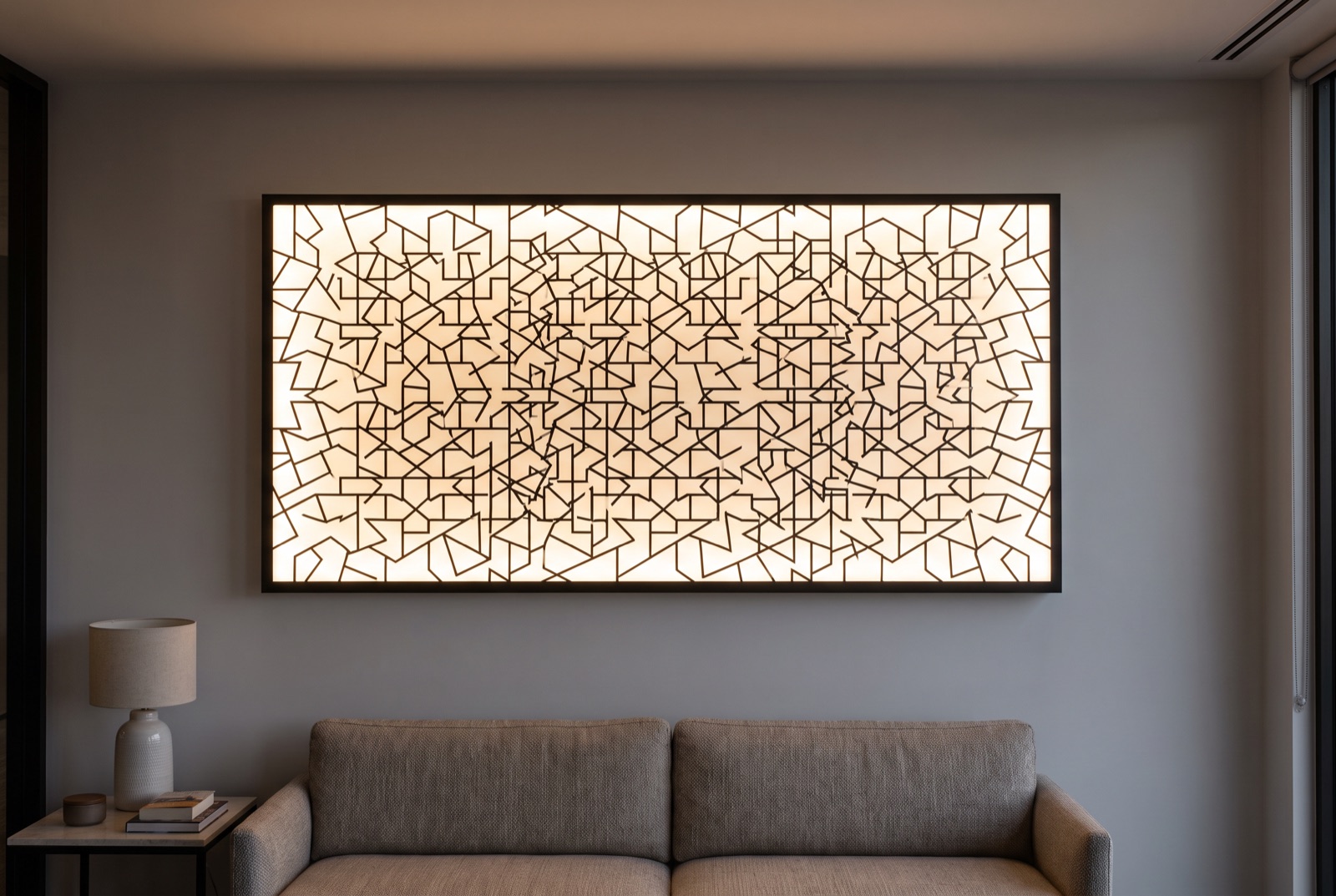
An evenly lit face with no hot spots: plain, behind a cut metal pattern, or carrying a printed picture.
Best forLounges, lift lobbies, windowless rooms
Lit logos and letters
Halo-lit, front-lit and edge-lit letters, sized so the glow lands cleanly on the wall behind.
Best forReception walls, shopfronts
LED neon
A soft even line of colour bent into words or a drawing, on a clear backboard.
Best forCafés, breakout areas, retail
For screens rather than light, see LED walls. Prices for lit signs are on the rate card.
Preserved moss walls: green for rooms the sun never reaches
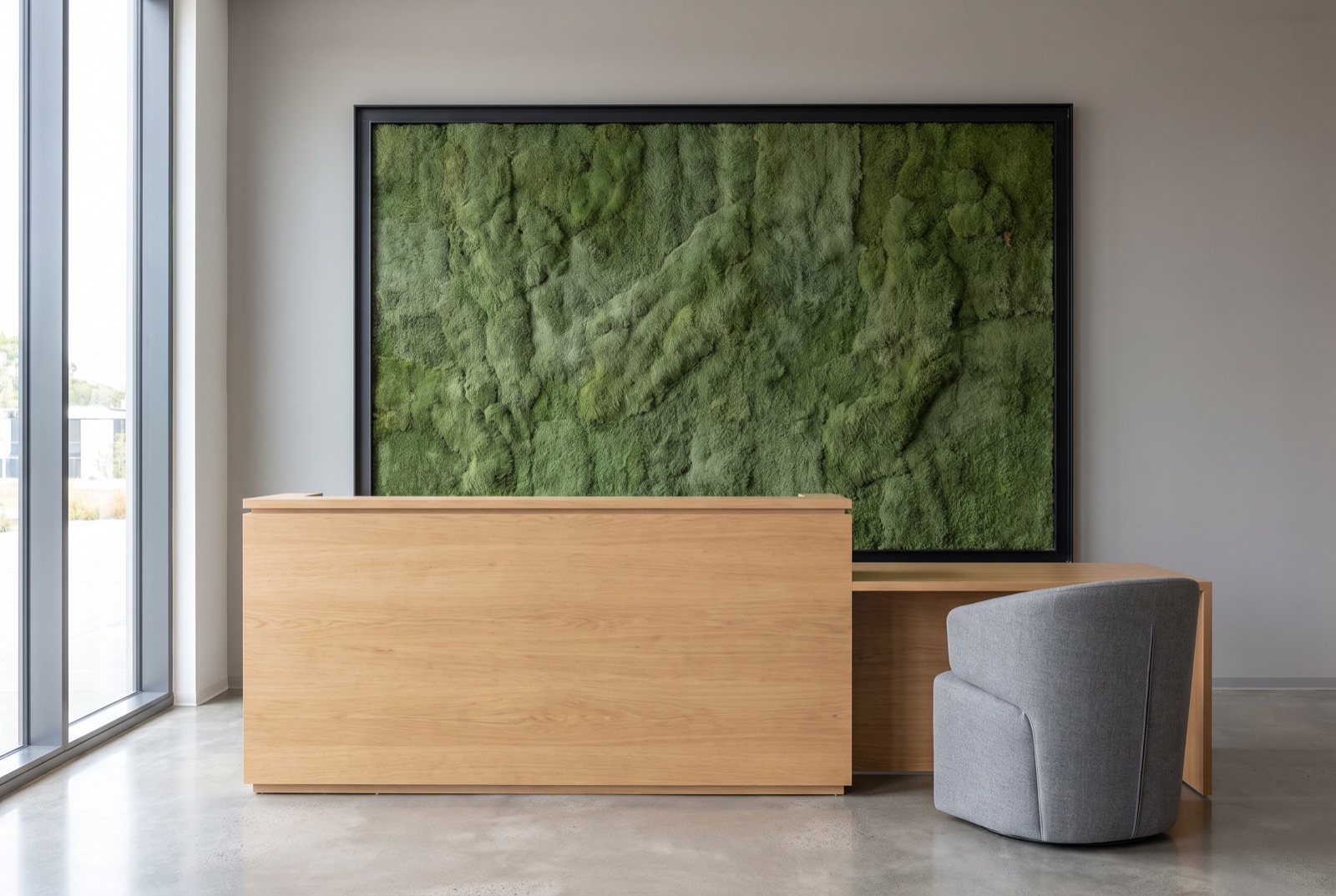
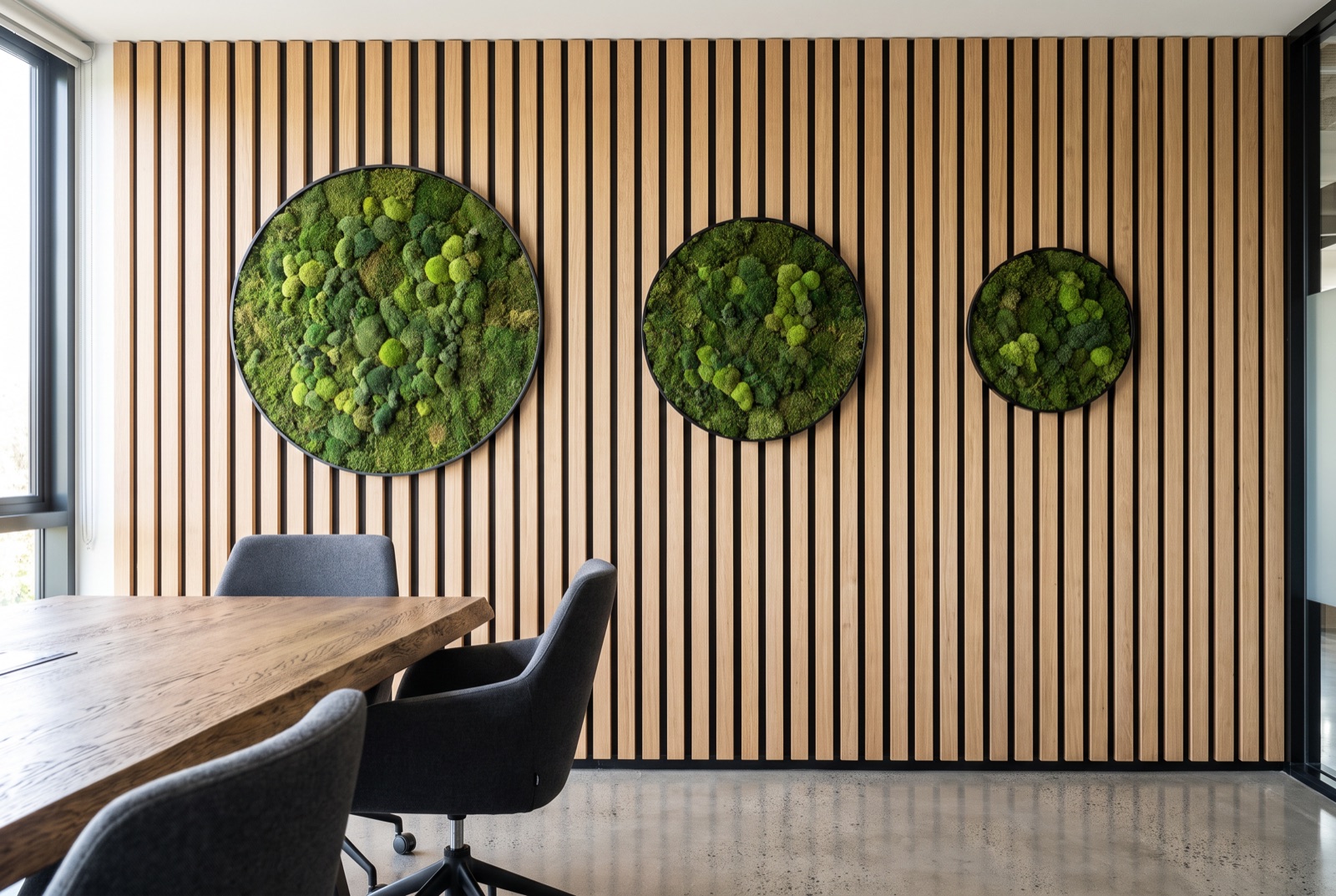
A preserved moss wall needs no water, no soil and no light. Living walls need daylight, water and a gardener, and most office walls have none of the three. Preserved moss is real moss, treated so it stays soft and green.
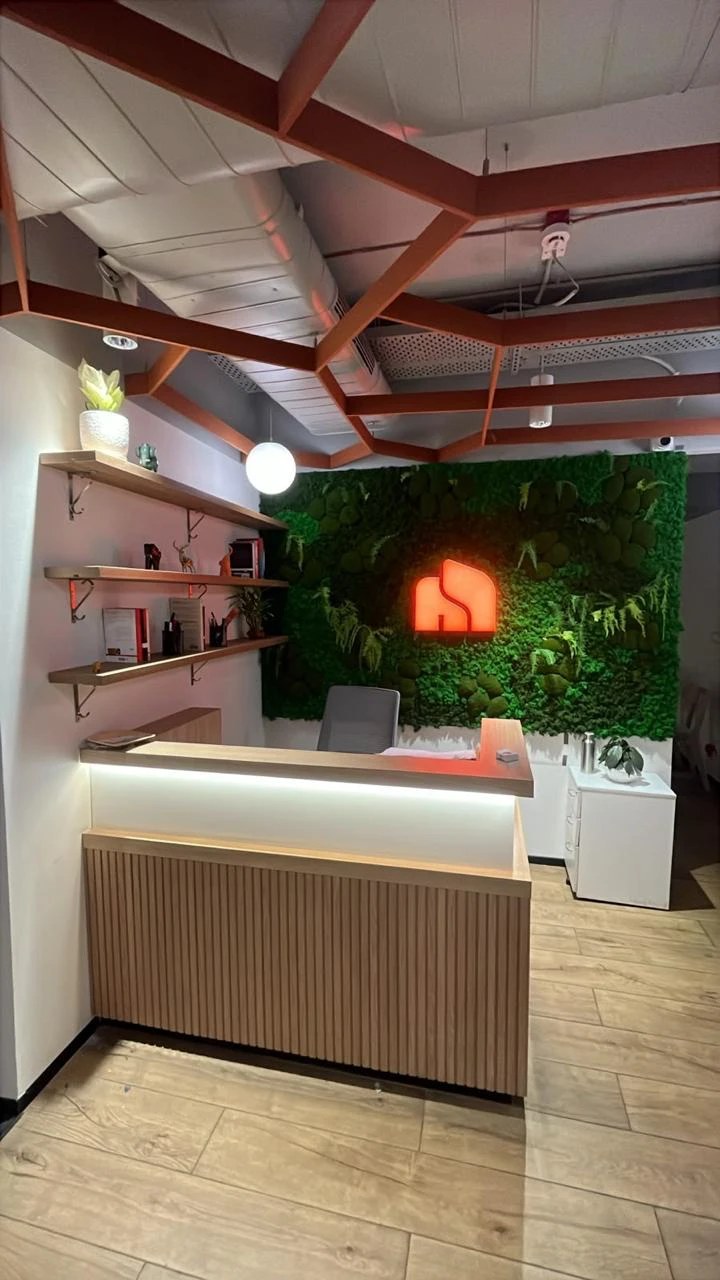
A reception wall we built
Cushion moss and reindeer moss with ferns, wall to wall behind the desk. The logo is lit from inside and fixed through the moss, so the green carries the brand colour. The desk has its own line of light under the counter, and the room light is kept low so the wall is what you see first.
| It needs | Preserved moss | Living wall |
|---|---|---|
| Daylight | None. It keeps its colour in a room with no window. | Bright daylight or grow lights, every day. |
| Water | None. It must never be watered or misted. | Irrigation line, drain and a waterproofed wall. |
| Upkeep | A light dusting. No trimming, no feeding. | Pruning, feeding and replacing plants through the year. |
| Weight and depth | A light panel, about 50 mm deep, on any sound wall. | A wet, heavy system that needs structure and a service space. |
| Where it fails | Direct sun, air-conditioner draughts, damp and outdoors. | Dark interiors, missed watering and pump failures. |
Where the light matters
Moss wants no sun at all. We keep it off any wall the afternoon sun reaches, and use the room above to check.
How we light it
A warm line of light grazing down the face, at colour rendering 90 or more. Grazing light shows the mounds; flat light makes it look like carpet.
What it does for the room
It softens echo in hard, glassy rooms, and it gives the eye something natural to rest on. It does not clean the air, and we will not tell you it does.
Three textures
Flat moss for a calm field of green, reindeer moss for colour and softness, cushion moss for depth. We mix them, and add ferns or a lit logo, to suit the wall.
From the first visit to the last adjustment
Read the room
We visit, note which way each window faces, and photograph the walls in the morning, at midday and in the evening.
Draw the light
A layout of the three layers, with levels and colour for each area, and a picture of the feature in your space.
Show a sample
A lit sample of the real profile, panel or moss, held against your wall after dark, before anything is built.
Build it
Made in our factory in Bengaluru, with drivers sized and placed so they can be reached.
Fit and aim
Our installers fix it, set the dimming levels with you in the room, and hand over what to do if a light fails.
More on how projects run on our process page.
Lighting and moss walls, answered
The questions clients ask us most, with the short answer first.
How much light does an office need?
- An open office needs 300 to 500 lux on the desk. Meeting rooms need the same, receptions 200 to 300 lux, corridors 100 to 150 lux and lounges 100 to 200 lux. These ranges are in line with IS 3646 and common office practice. More light is not better: a lounge lit like an office feels like a waiting room.
What colour temperature is best for office lighting?
- Neutral white, about 4000K, is best for work areas in the daytime, because it matches daylight from the windows. Use warm white, 2700 to 3000K, for lounges, cafés and evening hours. A warm lamp beside a bright window looks yellow, so the two should be matched or the lights made tunable.
Which window direction gives the best natural light in Bengaluru?
- North-facing windows give the best working light in Bengaluru: soft, even and steady for most of the year. East windows are bright in the morning and calm after. South windows take high midday sun, mostly in winter. West windows are the hardest, with hot, low sun through the afternoon that causes glare and fades prints.
Does a preserved moss wall need water or sunlight?
- No. A preserved moss wall needs no water, no soil and no light. It is real moss treated with a plant-safe preserving solution so it stays soft and green without growing. It must never be watered or misted, and it should be kept out of direct sun, which fades and dries it.
How long does a preserved moss wall last?
- Indoors, a preserved moss wall usually keeps its look for several years, and suppliers commonly quote five to ten. It lasts longest in an air-conditioned room, away from direct sun, air-conditioner draughts and damp. Upkeep is a light dusting. It does not need trimming or feeding.
What is the difference between a preserved moss wall and a living green wall?
- A living wall is growing plants, so it needs daylight or grow lights, an irrigation line, a drain and regular gardening. A preserved moss wall is real moss that no longer grows, so it needs none of those. Moss suits interior walls with no window. A living wall suits bright spaces with a service budget.
Does a moss wall clean the air?
- No. Preserved moss is not alive, so it does not clean the air. What it does is soften echo in hard, glassy rooms and give people something natural to look at. Anyone selling a preserved moss wall as an air purifier is overselling it.
What is CRI, and what should I ask for?
- CRI, the colour rendering index, measures how true colours look under a light, on a scale up to 100. Ask for CRI 90 or more wherever brand colours, skin, food, timber or plants are on show. CRI 80 is the usual minimum for general office light. Under low-CRI light a green wall looks grey.
Can lighting be made to a custom size or pattern?
- Yes. We cut, bend, wire and finish lighting in our own factory in Bengaluru, so a line of light can be any length and a backlit panel any size. We build profile-light patterns, backlit panels with plain, cut-metal or printed fronts, halo-lit and front-lit letters, and LED neon.
What are the three layers of lighting?
- The three layers are ambient, task and accent. Ambient light lets people move around. Task light goes where people read and work. Accent light picks out what you want noticed, such as a logo wall, at about three times the brightness of the wall around it. Each layer gets its own switch or dimmer.
Start with a photo. Send us the wall.
Tell us which way the windows face, what the room is used for and the time the photo was taken. We reply with what we would do and a price range.
The photo marked our work is a wall we made and installed. Pictures marked concept are AI visuals for discussion. Final designs, sizes and prices are confirmed in our quote.